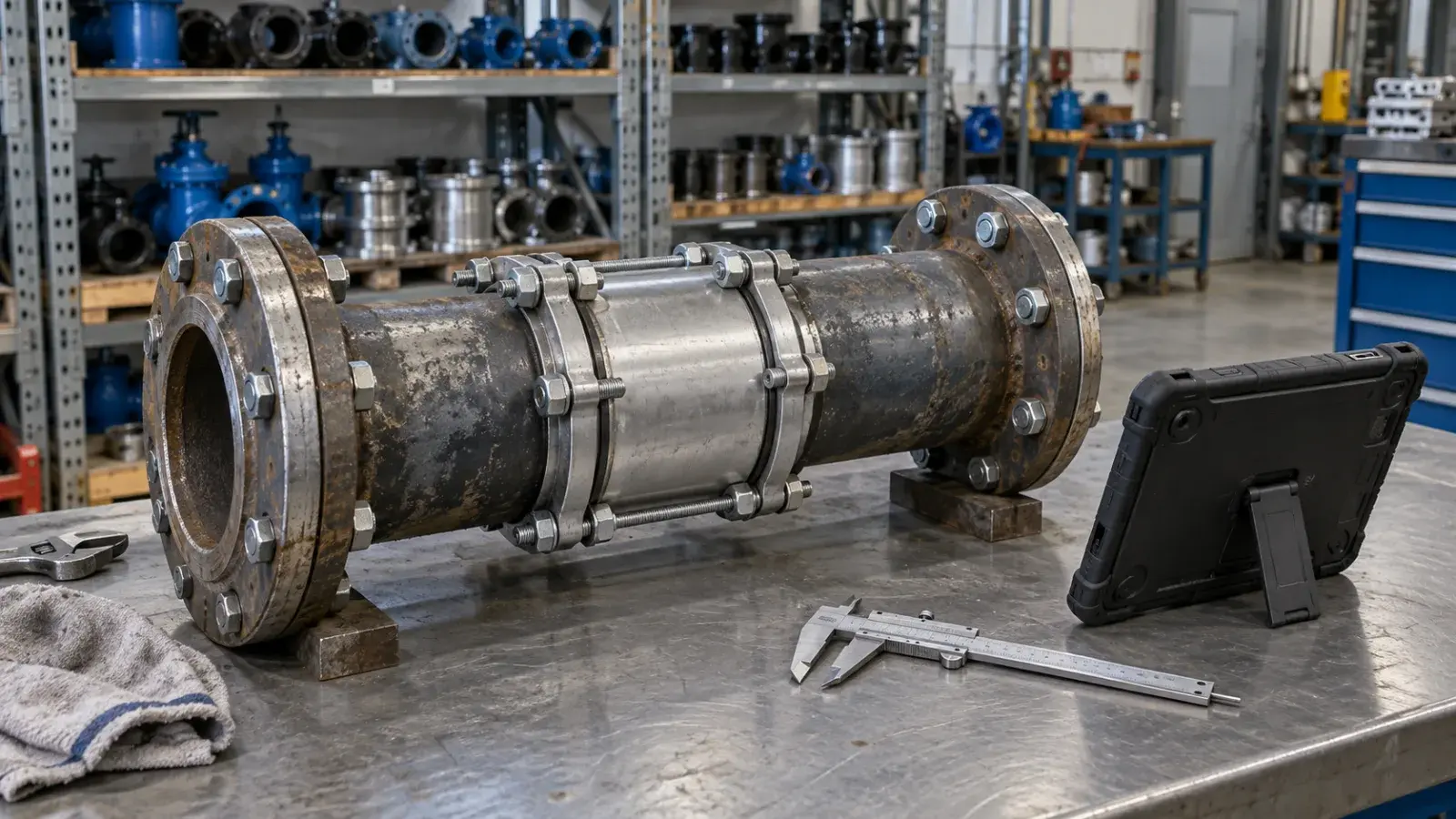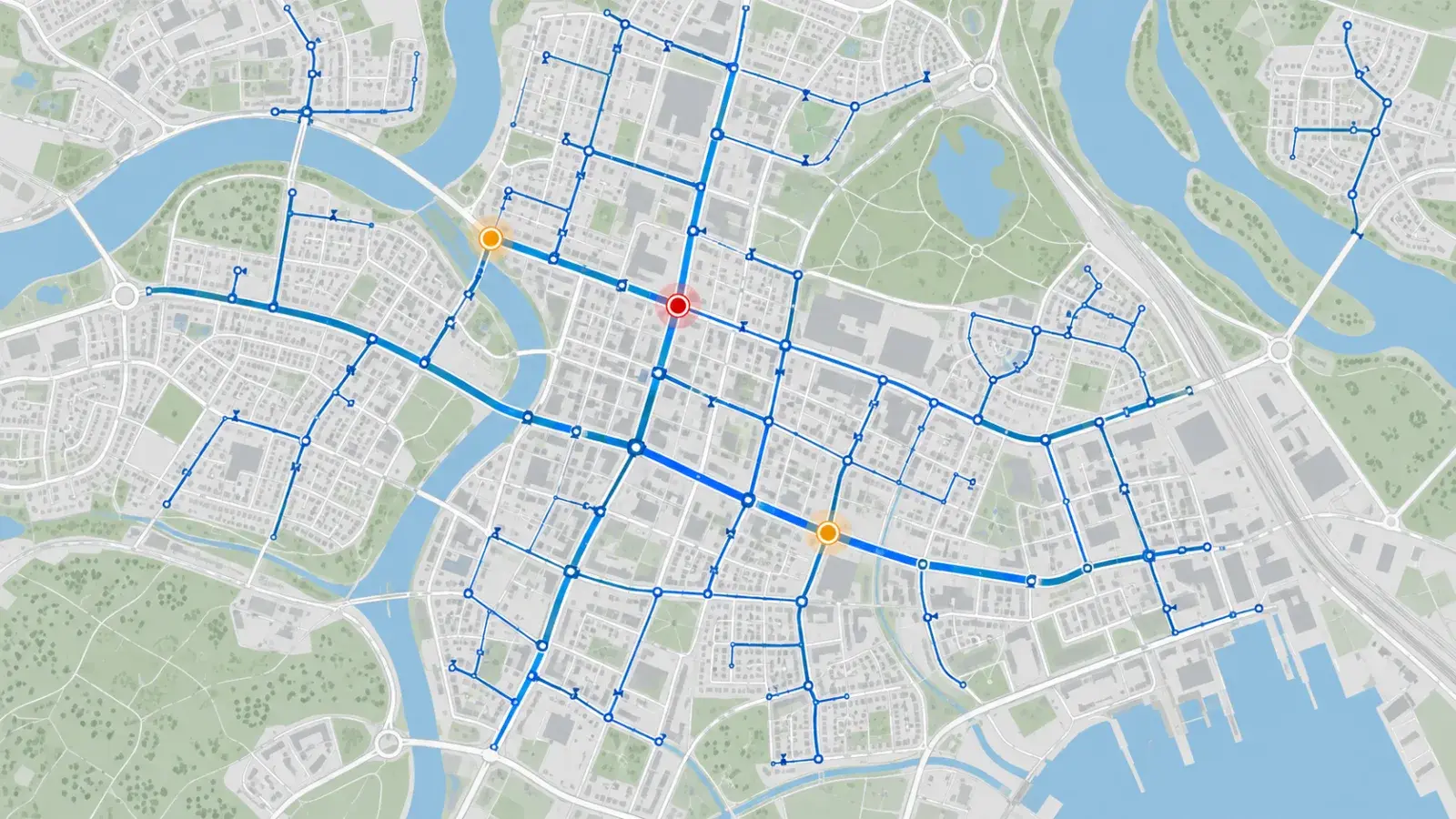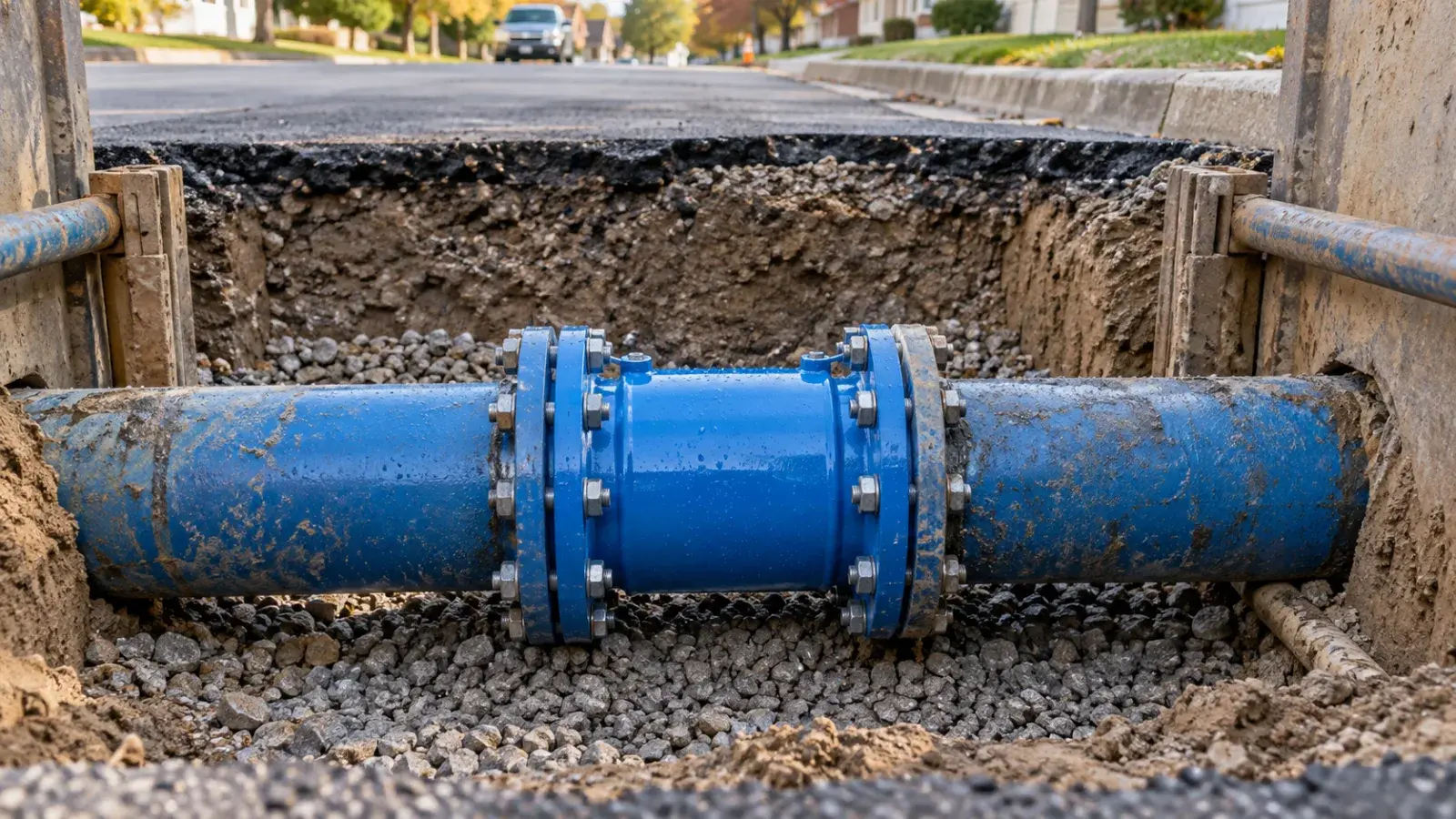
Trimble Unity Maintain, formerly Cityworks, can help a water utility organize maintenance around its mapped assets: identify the pipe or valve involved, assign work, record the intervention and retain information for the next maintenance decision. Its value is the connection between geographic information and work management. Trimble describes the product as GIS-centric asset management integrated with Esri ArcGIS. Trimble’s product overview.
For a drinking-water network team, a useful starting point is one complete process: a reported leak becomes a verified repair record against the correct asset. The planning worksheet below shows how to define that process before configuring software.
Is Trimble Unity Maintain the same as Cityworks?
Trimble now presents Cityworks as Trimble Unity Maintain. You may still encounter Cityworks terminology in documentation and existing installations. The wider Trimble Unity family also includes Unity Permit for permitting, licensing and land management, Unity Construct for capital program management, and Unity Field for field operations. Do not assume an existing Cityworks installation includes every Unity capability. Trimble Unity product family.
This article focuses on the maintenance workflow for a drinking-water distribution network. Treatment-process control, customer billing and hydraulic modelling require their own requirements assessment; the workflow described here does not establish those capabilities.
Why start with water-network maintenance?
A leak report describes a symptom and location. A maintenance record needs to explain which asset was affected, what the crew found, what work was completed and what remains unresolved. Linking those records creates a more useful basis for subsequent investigation than a list of closed complaints alone.
Trimble identifies water and wastewater networks as an application area for its asset information and maintenance tools, including Unity Maintain. Trimble’s water utility overview.
For a Jordanian or regional utility working in Arabic and English, agree on shared asset identifiers and consistent status meanings. The label “تم الإصلاح” should describe the same operational state as “Repair completed.” Translating labels without agreeing on the underlying definition can leave the office and field crew interpreting the same record differently.
What should the workflow record?
Use this original worksheet to scope a small pilot. These are proposed business requirements, not mandatory vendor fields or a claim that every step is preconfigured.
| Stage | Minimum information to agree | Who checks it | Acceptance question |
|---|---|---|---|
| Receive the report | Report ID, location, time, reported symptom | Dispatcher | Can we distinguish another report of the same incident? |
| Confirm the asset | Stable asset ID, asset type, mapped location, uncertainty | Field lead and GIS steward | Is the affected asset confirmed, or still an investigation? |
| Assign the work | Work reference, responsible crew, priority reason, target date | Supervisor | Is there one accountable owner? |
| Record the intervention | Findings, action, dates, labour, materials and supporting evidence | Crew lead | Can another person understand what was done? |
| Review completion | Reviewer, result, outstanding follow-up, GIS correction request | Supervisor | Does completion evidence support closure? |
| Learn from the record | Repeat work, unresolved defects, next inspection decision | Maintenance planner | Does this asset need further investigation? |
Trimble’s connector documentation identifies work orders, inspections, materials, labour and equipment costs among the available data areas. The worksheet adds editorial recommendations about handoffs and acceptance checks; it is not an API schema. Unity Maintain connector documentation.
Worked example: two reports, one suspected pipe failure
Hypothetical planning exercise: a utility receives two reports of water surfacing near the same junction. A dispatcher initially suspects pipe WM-1042. The second report arrives before the crew reaches the site.
- Keep the reports traceable. Record both report references and assess whether they belong to one incident. Do not count two reports as two confirmed failures.
- Verify the asset before treating the association as final. At the site, the crew finds the problem on service connection
SC-0187, not the suspected main. Preserve the initial report location and record the confirmed asset under the agreed correction process. - Assign and document the intervention. The supervisor assigns the repair work to a crew. The crew records its finding, the completed action, relevant resource use and supporting evidence under the utility’s approved operating procedures.
- Separate physical completion from record acceptance. The supervisor checks the repair evidence and any outstanding follow-up. A GIS correction can remain an assigned follow-up rather than disappearing when the repair is marked complete.
- Review the right history. Future investigation should find this repair against
SC-0187. It should not makeWM-1042appear to have suffered a confirmed failure.
The key design choice is how the team handles uncertainty. Requiring a guessed asset ID simply to advance a record may make the database look complete while weakening the maintenance history. Agree on an investigation state, a responsible reviewer and a correction trail before the pilot.
This scenario describes intended behaviour to validate in your environment. It does not claim that these states, duplicate checks or review rules exist automatically in the product.
Where do preventive maintenance and monitoring fit?
Once identifiers and repair records are dependable, define a separate planned-work process for a limited asset class, such as valve inspections. Agree on the inspection purpose, scheduling basis, accountable team and result that triggers follow-up. Derive intervals from your engineering and operating requirements rather than copying a generic timetable.
Monitoring can add another trigger. Trimble documents an integration between Unity Remote Monitoring and Cityworks that can create work orders or inspections from configured IoT alarm conditions. That documentation uses legacy naming and was last updated in 2024; verify compatibility, licensing and configuration for the actual deployment. It is not evidence that every Maintain installation detects leaks automatically. Trimble’s monitoring integration documentation.
An alarm is a reason to investigate. Confirm the sensor-to-asset association, repeated-alarm handling and responsibility for reviewing the result before introducing automated work creation.
How should you judge the pilot?
Choose a limited service area and one workflow. As proposed acceptance checks, ask the team to demonstrate:
- A report with an uncertain asset can progress to investigation without inventing certainty.
- The crew and office can retrieve the same confirmed asset and repair history.
- Two reports of one incident do not inflate the confirmed-failure count.
- A supervisor can distinguish repair completion from an unresolved follow-up.
- Arabic and English status labels have matching definitions.
Measure record completeness and traceability first. If you later compare response time, define the start and end timestamps and compare similar incident types. A faster closure time alone does not prove a better repair or reduced water loss.
What should your team prepare next?
Bring a sample asset register, a representative report, a repair form and the worksheet above to a requirements discussion. Include the GIS steward, dispatcher, maintenance supervisor and field representative so that ownership decisions are made alongside software decisions.
If your immediate question is how to collect field observations, read our Survey123 and Field Maps inspection guide. That guide addresses field data collection; this article addresses the wider maintenance handoff.
Explore InfoGraph’s Trimble offering and GIS implementation services, or contact InfoGraph with your asset types, current ArcGIS environment and intended pilot. For gaps in GIS data preparation and field collection skills, review the training catalogue and confirm a suitable scope. A listed ArcGIS course does not by itself establish availability of a dedicated Unity Maintain course.