An alarm should create maintenance work only through an agreed rule that identifies the asset, assigns responsibility and handles repeat signals. Otherwise, automatic creation can multiply tasks without improving the response to the underlying event.
Trimble documents configurable creation of Cityworks work orders and inspections from Unity Remote Monitoring alarm conditions. That legacy guide is dated 2024; check compatibility and licensing for your deployment before applying it. Official monitoring integration.
Specify the handoff contract
The following worksheet defines proposed integration requirements, not default product behaviour.
| Requirement | Question for the pilot |
|---|---|
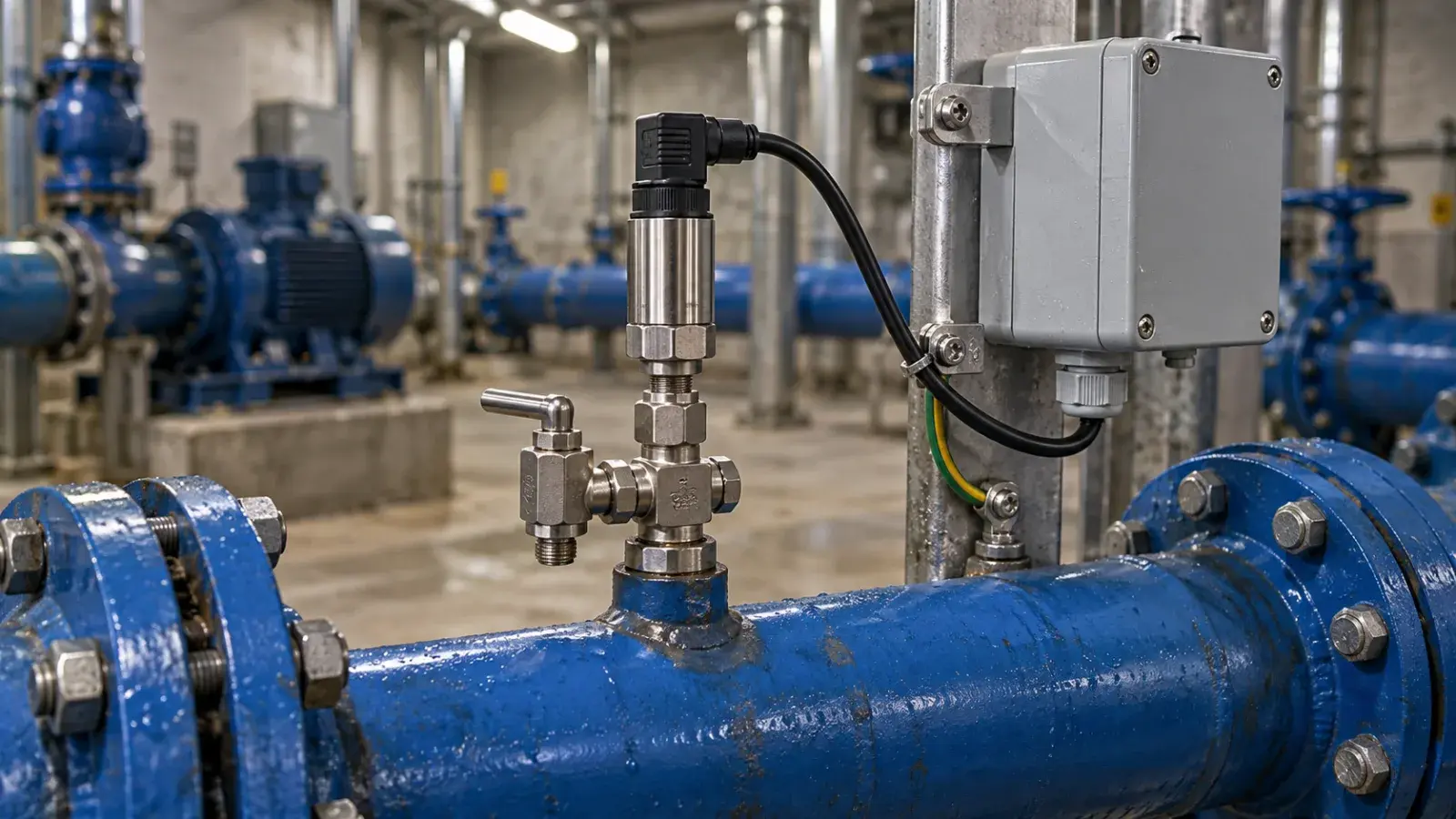
| Source identity | Which sensor and monitoring site produced the event? |
| Asset association | Which maintainable asset does that observation represent? |
| Event identity | How are a repeat message and a new event distinguished? |
| Time meaning | Is this observation time, receipt time or processing time? |
| Action owner | Who investigates and who can close the resulting work? |
| Recovery and failure | What happens when delivery fails or the signal returns to normal? |
Worked example: five messages, one investigation
Suppose a synthetic monitoring event produces five messages before a crew attends. The proposed rule opens one investigation and attaches subsequent messages to the same active event, rather than creating five unrelated work orders. This is a requirement to demonstrate in the chosen integration, not a built-in guarantee.
If the first delivery times out, retrying must not create another task unknowingly. Ask the integrator to demonstrate duplicate detection and a visible failed-delivery record. If a later signal returns to normal, retain the investigation until its responsible reviewer decides whether further action is needed; a changed signal alone is not proof of a completed repair.
Test the ambiguous association
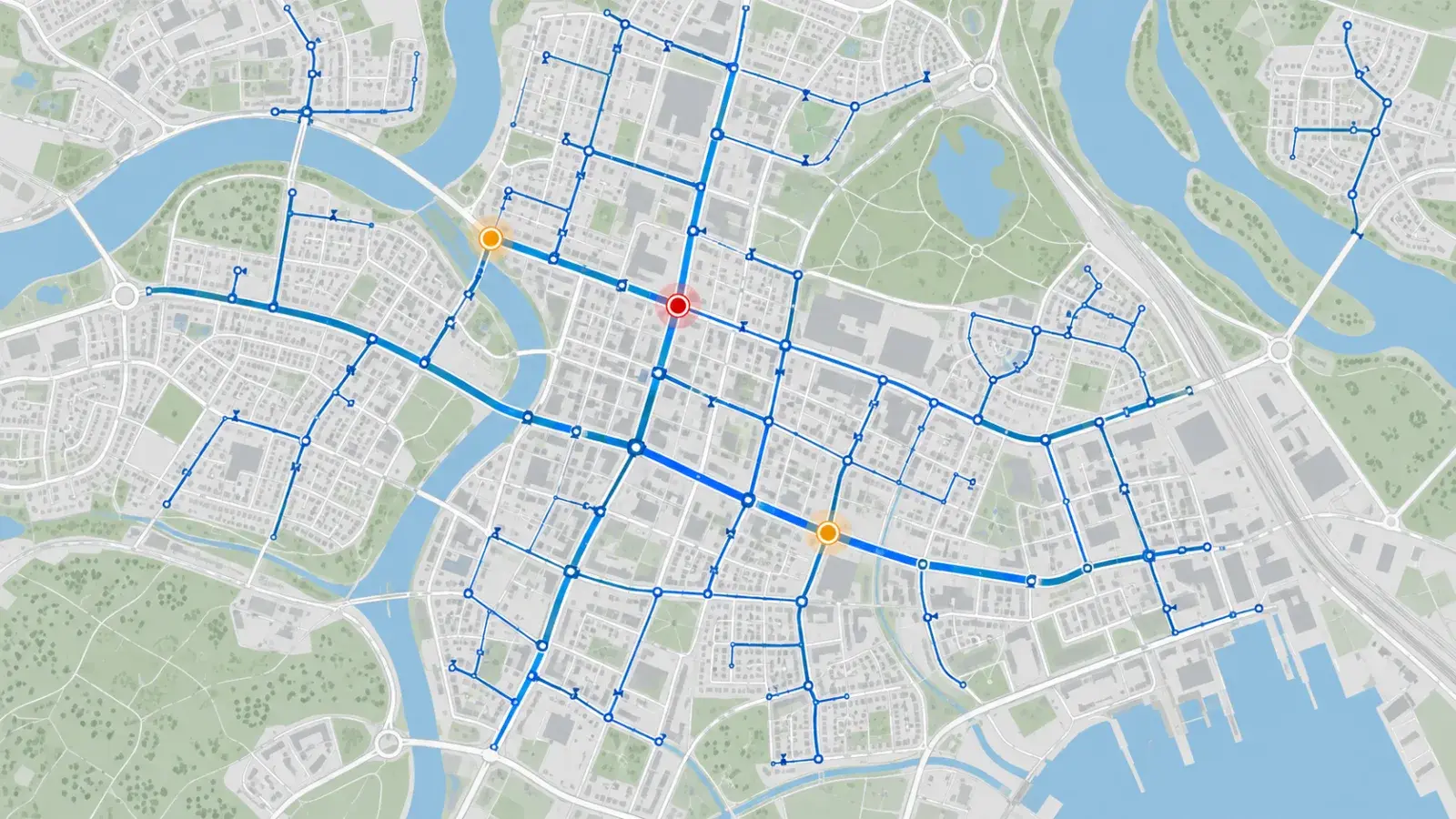
A monitoring site can describe a larger zone rather than one failed pipe. Do not present that observation as a confirmed failure of a nearby asset. Route it to an investigation with explicit uncertainty and let the team record the confirmed finding.
Test an event whose asset association is missing or obsolete. The system should follow an agreed exception path and alert the responsible role, not silently guess. Validate this behaviour with non-production messages before operational use.
How will you know the link works?
Trace one event from observation to receipt, assigned investigation and reviewed outcome. Repeat with delayed delivery and repeated messages. Record expected and actual results, including any manual step. This article supplies the test design; it does not claim the integration was executed.
Use the water-network repair guide to define the downstream evidence. Faster message delivery is useful only when someone can interpret and act on it.
Plan your next step
Review InfoGraph’s Trimble offering and GIS implementation services. Contact our team with a sample asset record and the decision you need the workflow to support. For GIS data and field-collection skills, explore the training catalogue and confirm the relevant course scope; a dedicated Maintain course is not assumed.